Subnautica made me afraid of water I invented
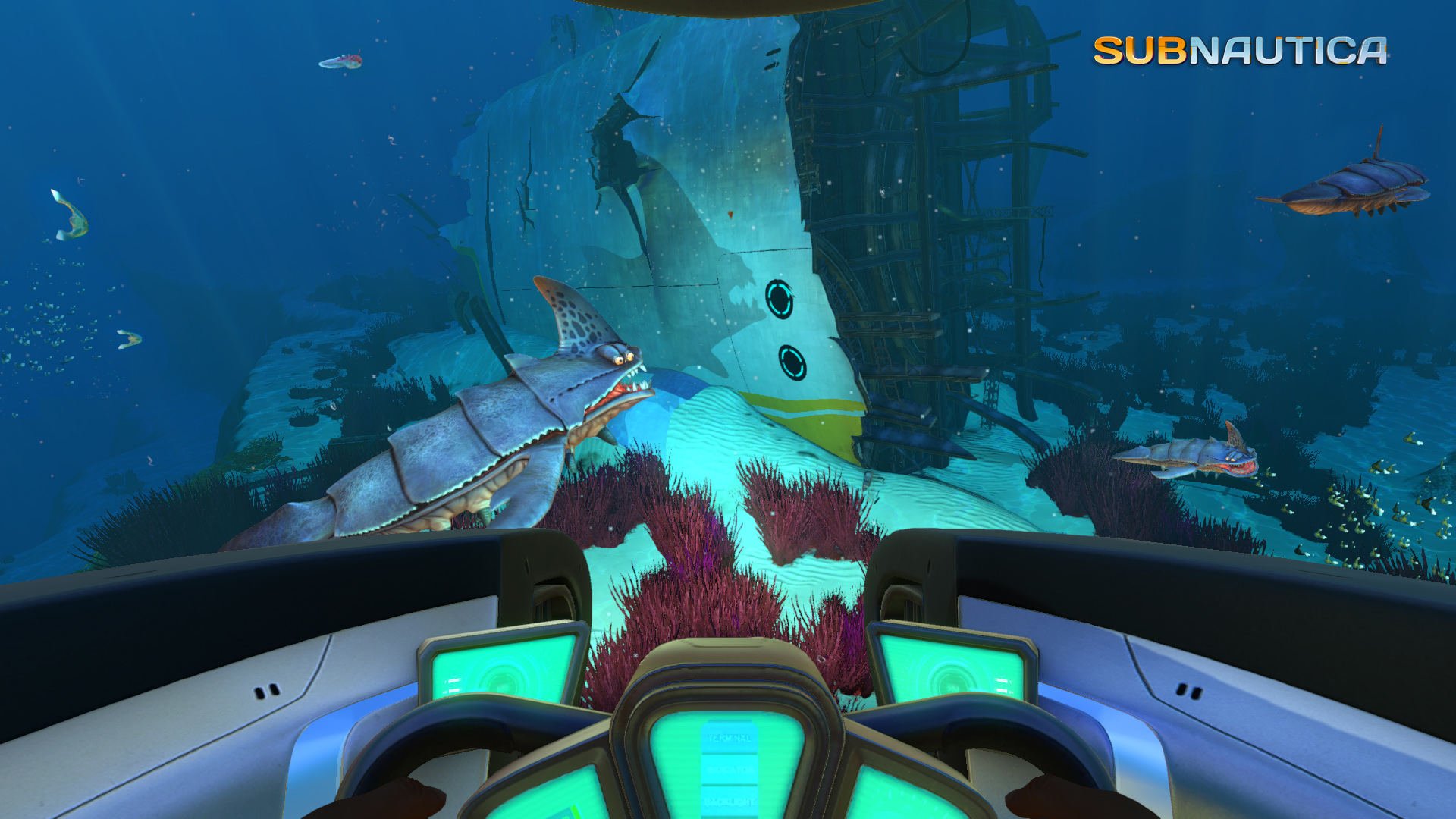
There is a specific kind of dread that Subnautica produces, and it has almost nothing to do with the creatures chasing you. Unknown Worlds Entertainment’s 2018 survival game drops you into the ocean of an alien planet, hands you a fabricator and a tin can of a starting pod, and then mostly leaves you alone. The horror — and it is horror, even if the store page won’t say so — comes from looking down into open water and genuinely not wanting to swim deeper. The fact that you invented that water makes it worse, not better.
Survival games are crowded territory. You have your resource loops, your crafting menus, your base-building tabs that eventually become a spreadsheet you manage instead of a game you play. Subnautica has all of that scaffolding. What it does differently is use the ocean itself as a pacing mechanism, and use silence and scale and the specific way light behaves underwater to make that pacing feel earned rather than artificial. Not every piece of the design is as elegant as the best parts. But the best parts are genuinely remarkable.
The opening hours are doing a lot of work
You begin in shallow, sunlit water. Colourful fish drift past. The seafloor is close enough to see clearly. The game is giving you the nicest version of itself first, and there’s a deliberate design logic to this: it establishes a baseline of what safe feels like, so that anything deviating from it registers as threat. When you first swim out past the edge of the starting reef and the floor disappears below you, the game hasn’t changed the music dramatically or flashed a warning icon. It’s just gone quiet, and the water has gone dark, and your brain does the rest.
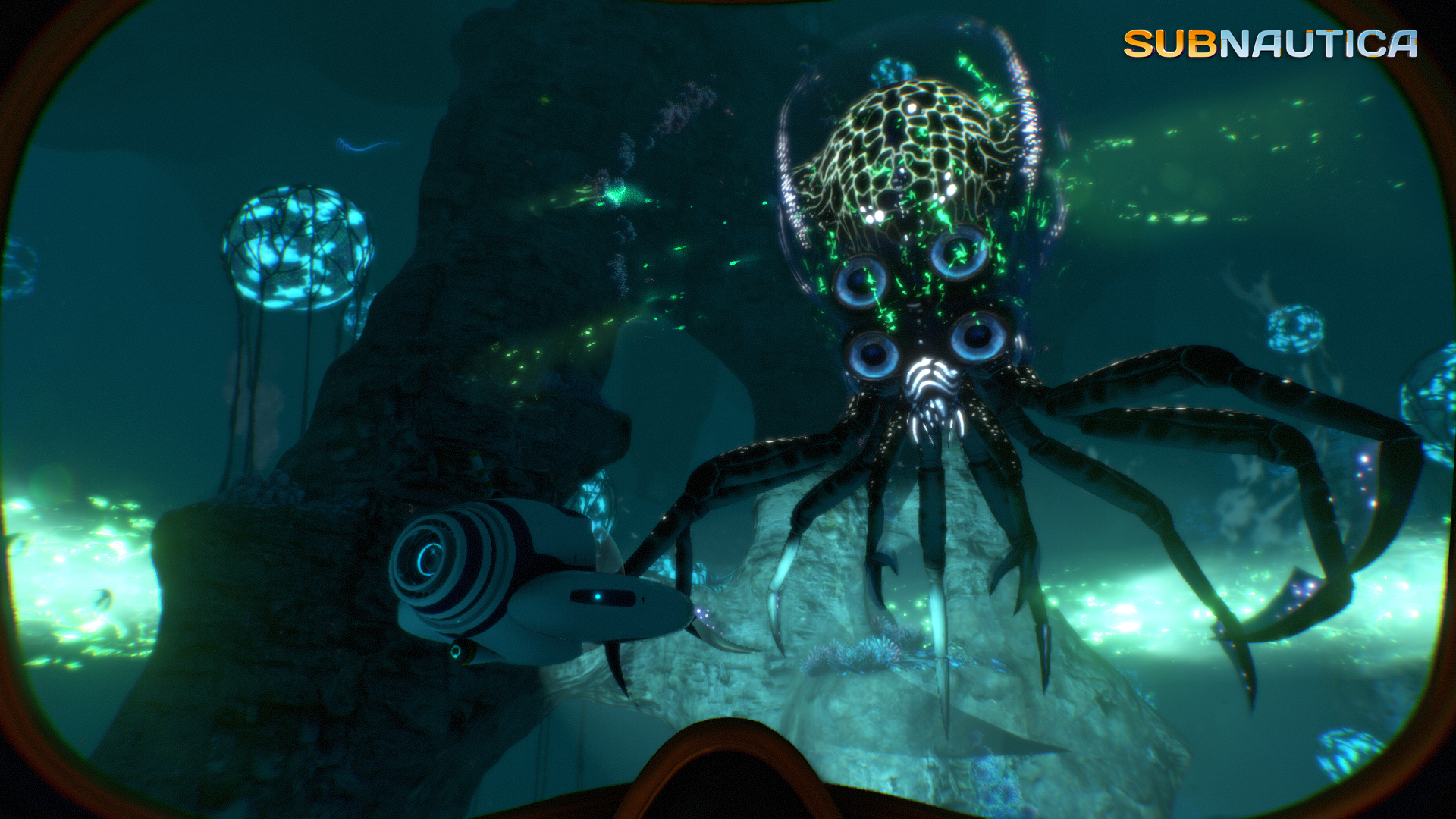 Atmospheric detail in Subnautica.
That psychological sleight-of-hand is more sophisticated than most survival games bother with. Rust and Valheim establish danger through enemy encounters and death penalties. Subnautica establishes it through negative space. The threat might be down there. You don’t know. Going to look is the loop, and the loop is surprisingly durable across many hours of play, because the game keeps revealing new baseline-normals and then finding ways to undercut them.
Resource management without the spreadsheet feeling
Crafting in Subnautica is tiered in the way you’d expect: you find raw materials, you combine them into components, you combine components into tools and habitat modules. The twist is that almost every crafted item expands your physical range rather than just your combat ability. The Seaglide extends how far you can reasonably swim. The Seamoth submarine opens entire depth bands that were previously inaccessible. The Prawn suit — a mechanical diving rig you pilot from inside — lets you walk along the seafloor in zones where the pressure would otherwise kill you.
This is actually a smart structural choice. Progression in most survival games means you can kill harder things. Here, progression means you can go to new places, and new places are where the interesting encounters and story fragments live. It keeps the crafting loop tethered to exploration rather than combat scaling, which suits a game that barely has combat as a primary verb. There are predators, and some of them are terrifying, but fighting back is almost never the right answer. Your tools are for surviving and moving, not for winning fights.
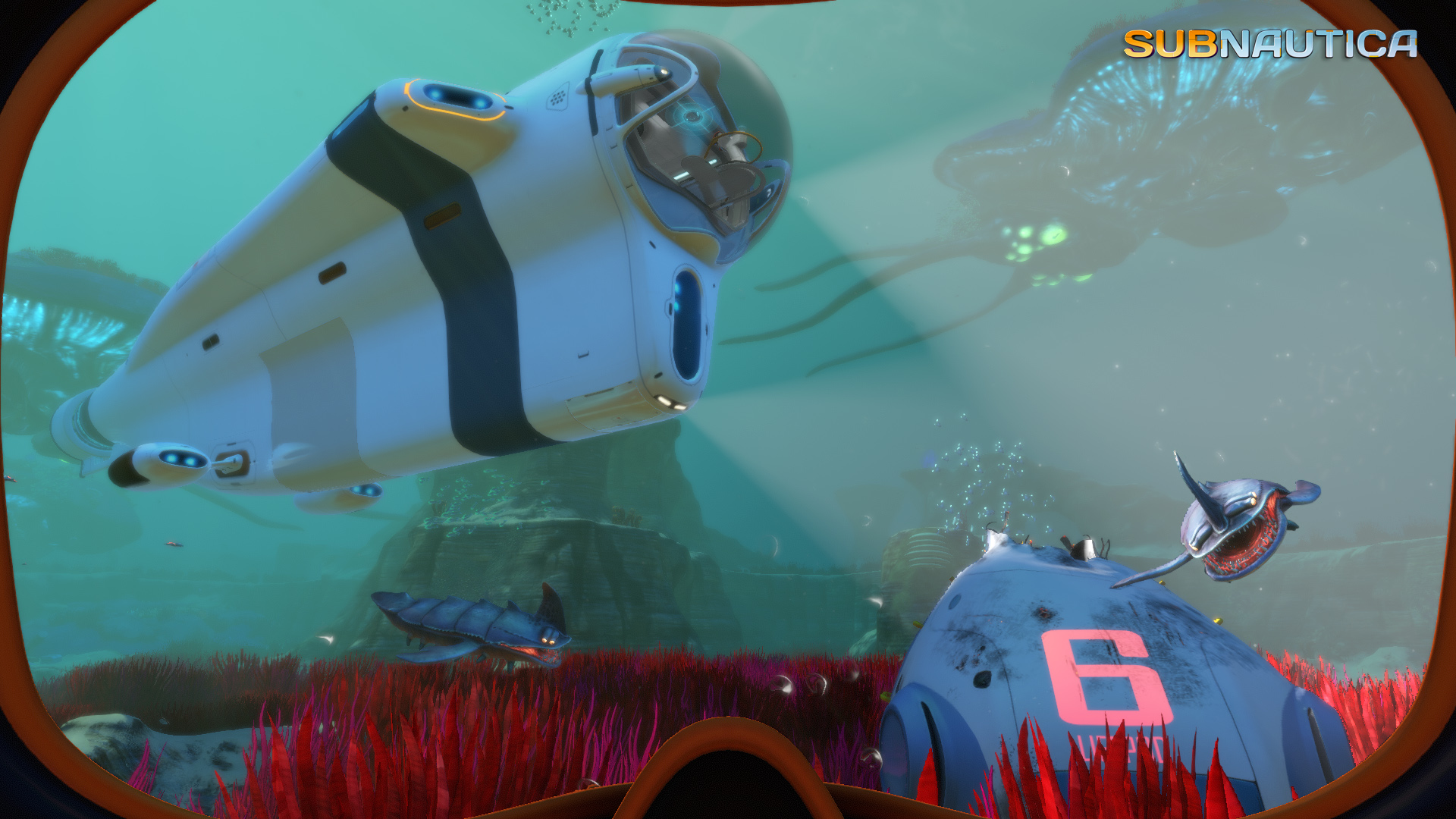 Combat encounter in Subnautica.
The inventory management is, frankly, a little annoying. Space is limited in ways that sometimes feel arbitrary, and trips back to base to deposit materials can interrupt momentum at the worst moments. It’s a familiar survival-game friction point, and Subnautica never quite solves it. You adapt, eventually, but the early hours in particular involve a lot of back-and-forth that the pacing doesn’t fully absorb.
The biomes as character design
Where Subnautica earns genuine praise — the kind that sounds like hyperbole but isn’t — is in the environmental design of its deeper zones. The kelp forests near the surface feel Mediterranean and relatively safe. Push further down and you reach the Mushroom Forest, which is alien in texture and colour but still lit well enough to navigate comfortably. The Bulb Zone glows in oranges and purples. Each area has a distinct visual language and a distinct acoustic signature, which is crucial: the ambient sound design by Simon Chylinski is doing as much to communicate safety and threat as any visual cue.
Then there are the genuinely dark zones. The open reef areas drops away into what the game calls the Grand Reef below, and the transition between them — the moment when visibility shortens, the floor recedes, and the ambient track changes to something with more low-frequency drone — is one of the most effective uses of environmental audio in recent memory. No cutscene. No dialogue. Just water, and depth, and the sound of your own submarine’s engine becoming the loneliest noise in the world.
Who We Are told in fragments
Subnautica has a narrative, and it’s delivered almost entirely through audio logs, scattered debris, and the way you piece together what happened to the people who were here before you. The game never holds your hand through this. You find a data download in a wrecked structure and file it away, and two hours later you find another fragment that recontextualises the first, and the picture builds slowly enough that paying attention to it feels like active archaeology rather than passive reception.
It’s not a flawless approach. Some players will miss significant story beats entirely because they happened to explore in a particular order, or because the interface for reviewing downloaded logs is buried in a menu that doesn’t announce itself clearly. The narrative payoff in the late game is also somewhat compressed — after many hours of careful breadcrumbing, the concluding sequences feel rushed in a way that doesn’t quite match the deliberate pace of everything before them. It’s not a broken story, but it’s an uneven one.
What the technical state still costs you
It’s worth being honest about this: Subnautica launched in a rough state and went through a long early access period before its full release. The retail version is substantially more stable, but performance problems haven’t entirely disappeared. Base building in particular can produce stutters and frame-rate drops that break immersion at moments when immersion is the product. Loading new areas of the ocean sometimes takes long enough to notice.
These are real costs, and how much they bother you will depend partly on your hardware and partly on your tolerance for janky edges around otherwise strong design. On PC with a modern setup, most of the technical friction is manageable. The experience on console at launch was rougher. Unknown Worlds has continued to patch the game, and the situation has improved, but the caveat deserves mentioning rather than footnoting.
The metric that actually matters
The honest measure of whether Subnautica’s particular design is working is whether it produces the specific feeling of not wanting to go deeper — and then making you go anyway. It produces that feeling repeatedly, consistently, across a dozen-plus hours of play, using tools that are mostly atmospheric rather than mechanical. That’s a rarer achievement than it sounds. Games about exploration usually tell you that discovery is exciting. Subnautica makes discovery feel like courage, which is a different thing entirely.
It has sloppy edges. The inventory system taxes patience. The ending undersells the journey. But the core of it — the ocean, the silence, the way the light thins out as you descend into water you know is fictional and fear anyway — holds. Subnautica is one of the few survival games that earns the word ’atmosphere’ as something more than a synonym for ’has nice graphics’. Go in expecting some roughness, and what you’ll find underneath is something worth the swim.
Editorial scoring
Reader Q&A
How long does it take to finish Subnautica made me afraid of water I invented?
Main story runs around 85 hours depending on how thoroughly you explore. Completionists can spend 2-3× that.
Is Subnautica made me afraid of water I invented good for newcomers to Underwater Survival?
For total newcomers, expect a 5-8 hour ramp-up. Once you internalize the loop, it clicks.
Which platform should I play Subnautica made me afraid of water I invented on?
PC version offers the highest fidelity if your rig can handle it. Console versions are polished out of the box.
Was Subnautica made me afraid of water I invented worth the launch-day price?
Depends on backlog. The replay value justifies the price for genre fans; casual players should wait for a 40%+ discount.
Are there DLCs or expansions worth picking up?
The base game is complete; expansion DLC adds 10-15 hours of additional content if you want more.
What did Unknown Worlds get right (and what could be better)?
The systems are confident and the combat is satisfying. The story handoffs and load times are the rough spots.